Potala Karma · Official

Meet the collective

Five makers. Five disciplines. One collective shaped by handwork, patience, and respect for the traditions carried through each material.

Dolma weaving by hand

Dolma

Weaving Artisan
Born May 10, 1985 · Golog, Qinghai

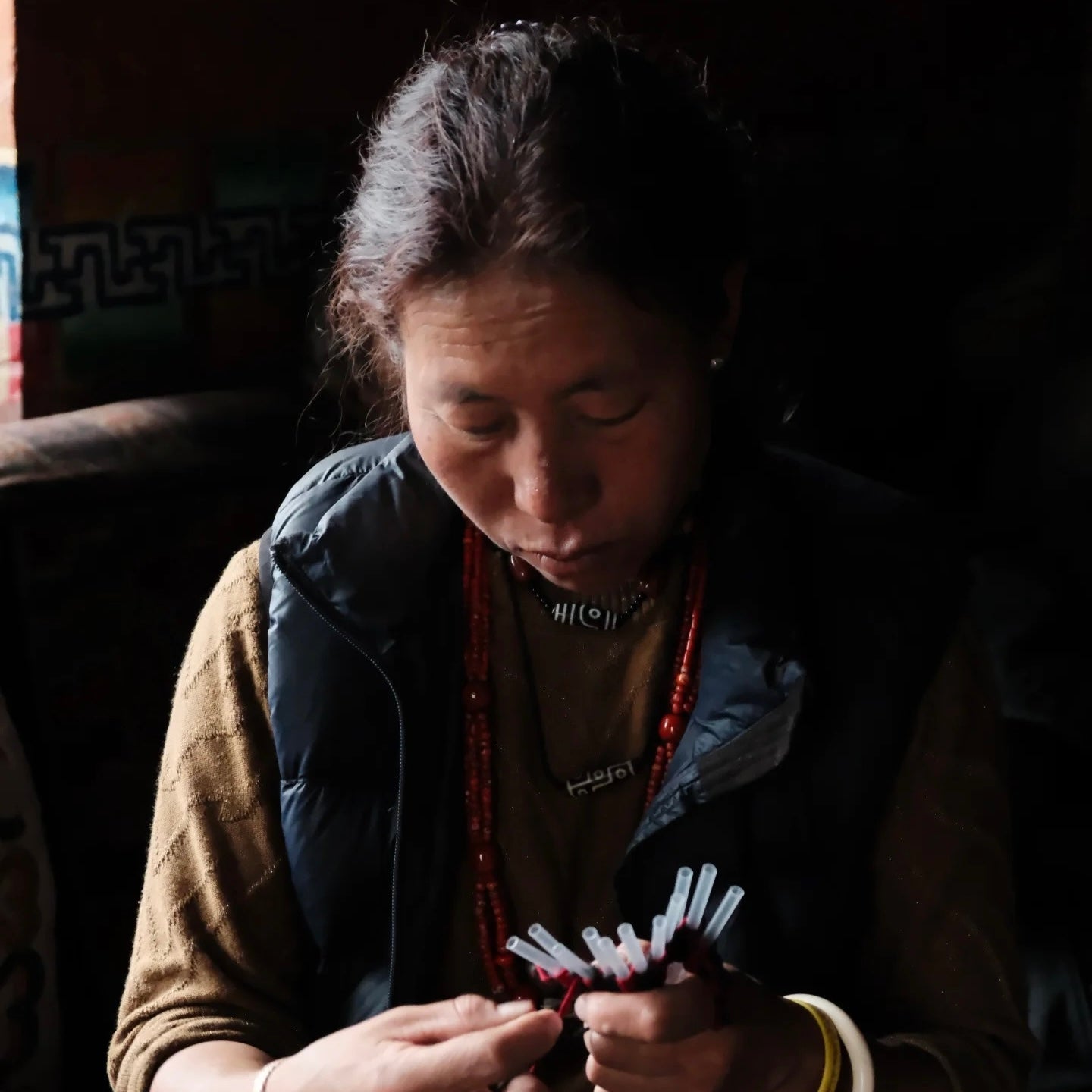
Dolma grew up in a pastoral tent. Her mother was known across the grasslands as a gifted weaver, spinning and weaving while tending sheep for forty years. Dolma learned to twist wool at six and could weave a complete length of pulu by eight.

Her mother taught her that a thread must be neither too tight nor too loose: too tight and the work becomes rigid; too loose and it loses its strength. Dolma carried that lesson into the cords she now makes for bracelets, pendants and prayer beads.

After moving to the city and raising a family, she continued working whenever time allowed. Others wondered why she persisted when factory-made cords were everywhere. Her answer remained simple: if the hands stop, the thread breaks—and with it, what her mother taught her.

Gesang encountered her work at a roadside stall in Golog. The method was old, but the colors and forms felt alive. He followed the work back to her home and told her that this craft deserved to travel farther than that roadside.
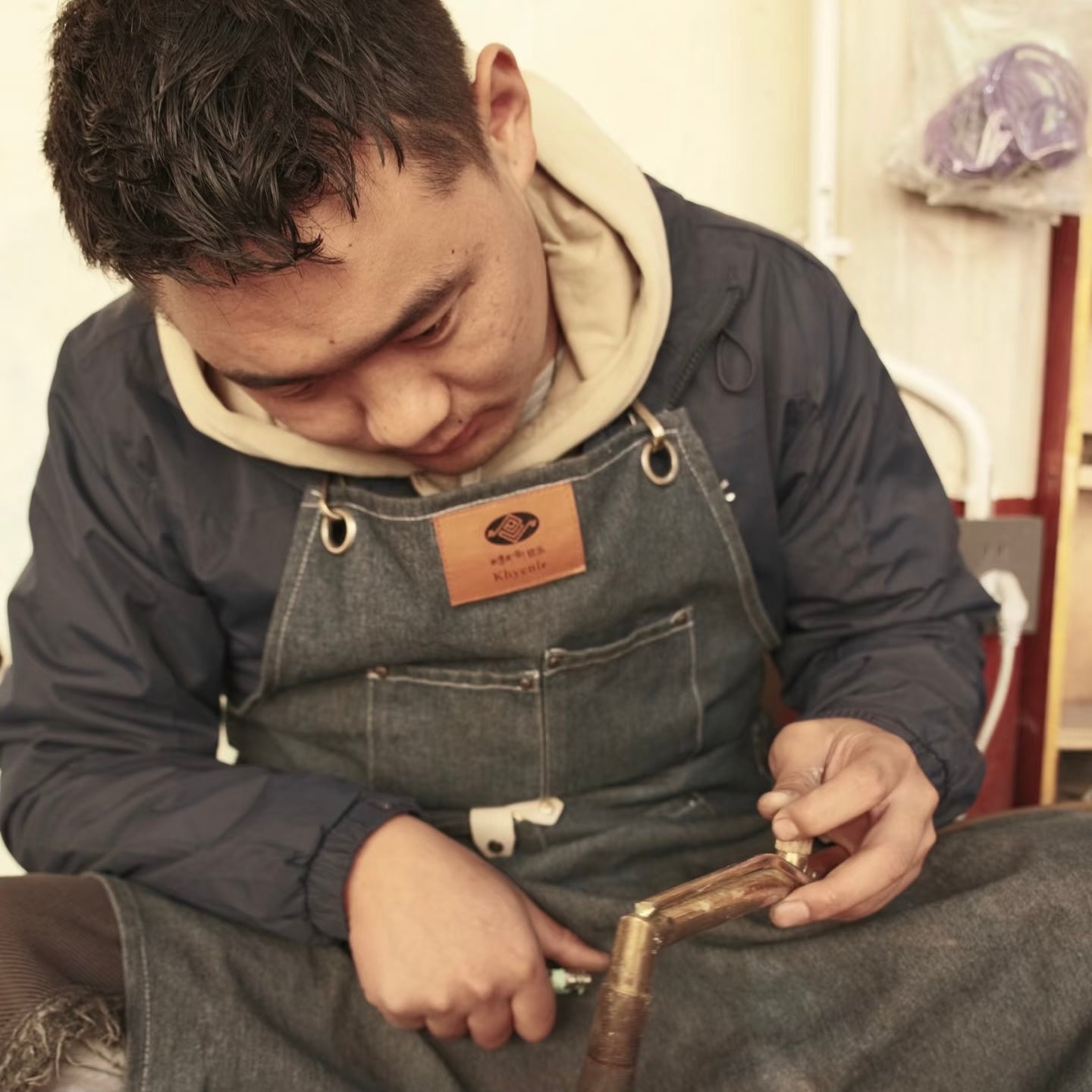
Dawa working on a handcrafted piece

Dawa

Dzi Artisan
Born July 15, 1989 · Lhasa, Tibet

Dawa’s name means “moon.” She was born on a full-moon night in Lhasa, and her family remembers the light catching every line of the Jokhang’s gilded roof.

Her grandmother was a longtime Dzi trader near Barkhor Street. She taught Dawa to look beyond patterns and study the depth of a bead’s surface and luster. From the age of twenty, Dawa began traveling independently across the plateau—from Ngari and Nagqu to Chamdo and Shannan—meeting families, listening to their histories and learning when to walk away.

She never pressured anyone to part with a bead. If a family did not wish to sell, she would share butter tea and leave with the relationship intact. To Dawa, a Dzi is not simply merchandise but an object carried through time, moving from one custodian to another.

She met Gesang at a gathering in Lhasa. When he said he wanted to work with Dzi, she asked whether he understood them. He admitted that he did not. Dawa smiled and answered that someone willing to admit that might also be willing to show respect.

Tsering carving by hand

Tsering

Woodcarver
Born December 3, 1968 · Garzê, Sichuan

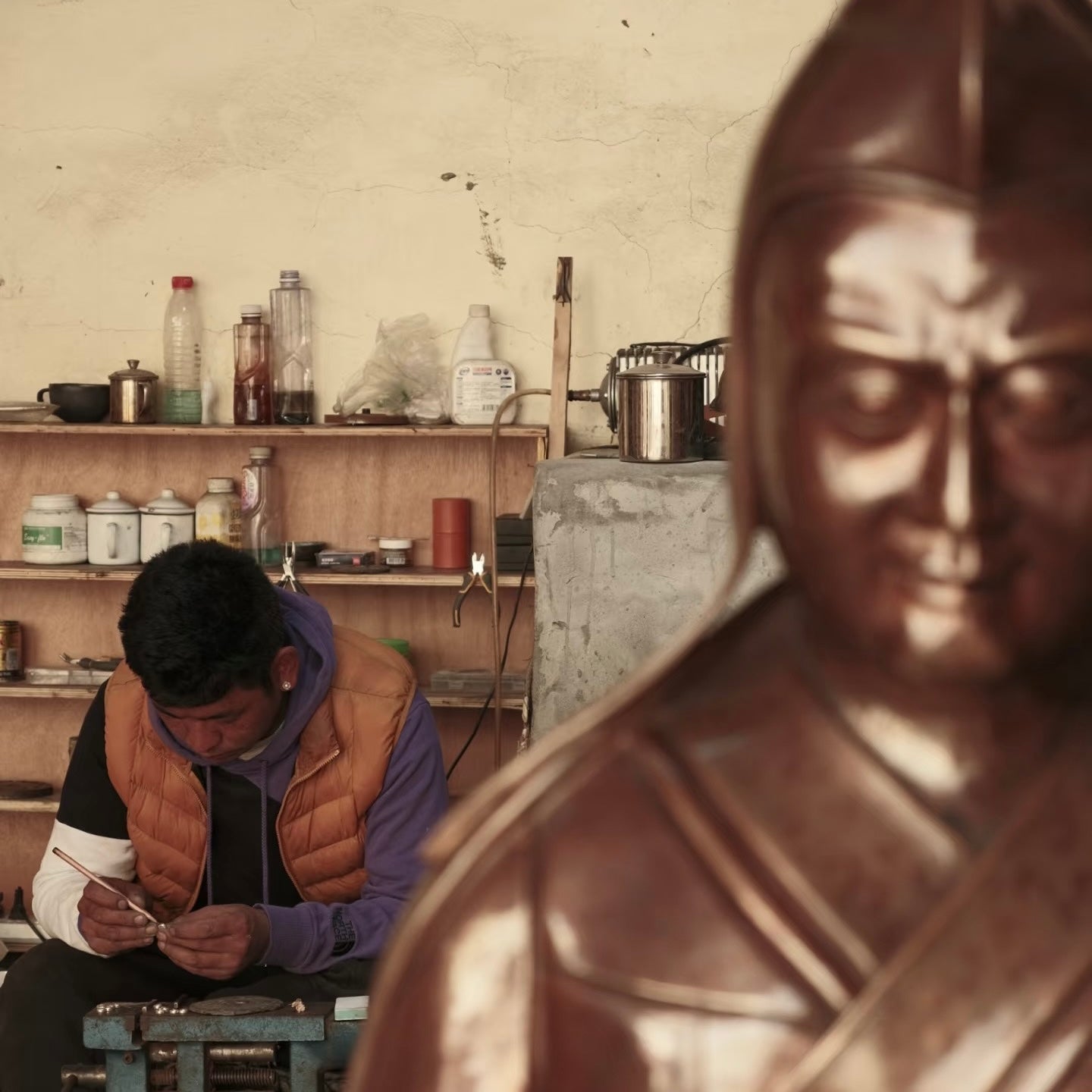
Tsering is the eldest of the five, and his hands are the steadiest. As a young man he traveled through Kham with temple construction teams, working on carved interiors and architectural details. His largest project occupied four years; his smallest was a wooden bird no bigger than a thumb, made as a birthday gift for his daughter.

After losing his wife at thirty-five, he continued carving with his five-year-old daughter on his back. The sound of the knife against wood became her lullaby. Years later she left for university in Chengdu, while he remained in the old family house in Garzê, its courtyard gradually filling with timber and finished work.

On the final day of every piece, Tsering sands each edge until it rests gently in the hand. He believes a finished object should never punish the person who touches it.

When Gesang visited him, the courtyard held carvings that had never found buyers. Tsering said he did not lack skill; he lacked a place that would neither hurry him nor wait impatiently. Gesang answered: “Come. Your time is yours.”

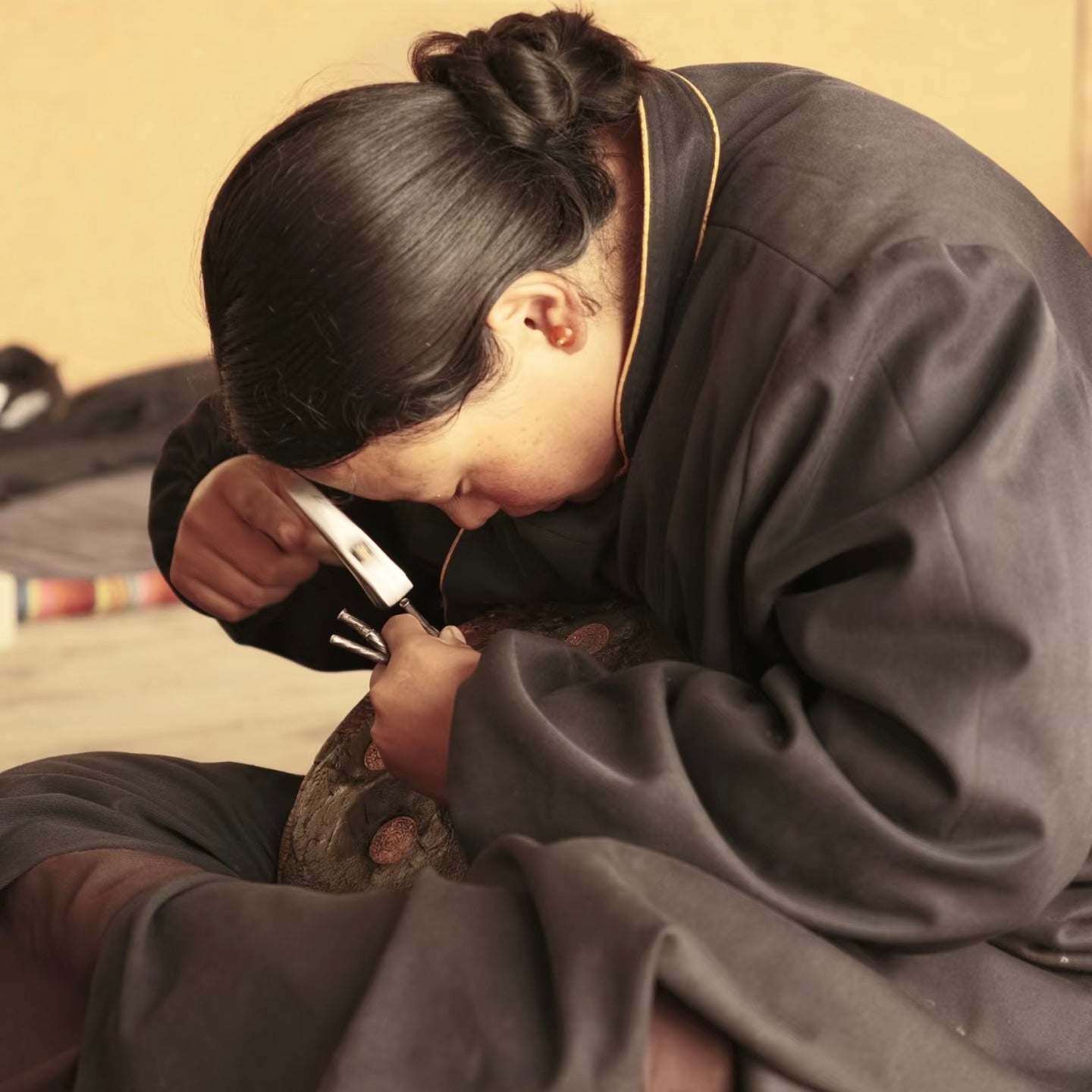
Gonpo working beside a traditional mould

Gonpo

Amulet Artisan
Born October 2, 1981 · Kathmandu, Nepal

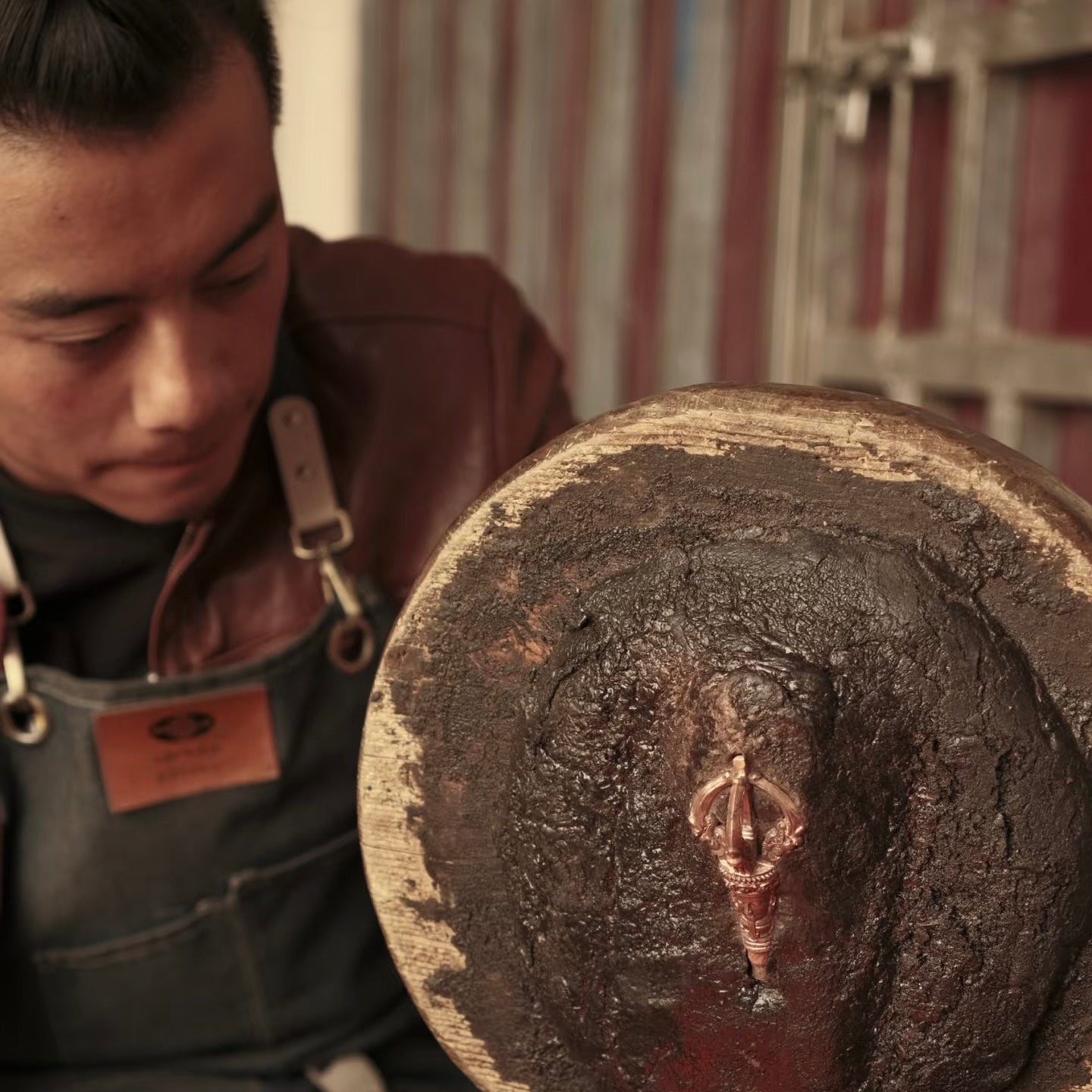
Gonpo entered a monastery at twelve, learning scripture and the making of tsa-tsa. Before his teacher passed away, he told the young apprentice that the work he sought was not confined to a building—it had to remain in his hands. Gonpo later returned to lay life, but he never abandoned the craft.

He spent ten years in Kathmandu metal workshops learning lost-wax casting, chasing and inlay. On the back of each amulet, he leaves a small, imperfect fingerprint: a reminder that the object passed through a human hand rather than a machine.

His hands carry scars from sharp copper edges. He prefers to work without gloves because, as he puts it, a barrier keeps him from feeling the temperament of the metal.

Gesang met him at a craft market in Nepal. He turned over one of Gonpo’s amulets, noticed the fingerprint and asked whose it was. When Gonpo said it was his, Gesang replied that Potala Karma needed someone who refused shortcuts.

Sangye painting in the workshop

Sangye

Thangka Painter
Born April 15, 1973 · Shigatse, Tibet

Sangye comes from a family of painters. His grandfather worked on murals connected with Tashilhunpo Monastery, and his father painted thangka throughout his life. Sangye began grinding pigments at seven—lapis lazuli, malachite, coral and other mineral colors—and spent three years preparing them before his father allowed him to hold a brush.

He remembers the first time he painted the eyes of Green Tara. His hand trembled for an entire day. His father told him: “You are not painting her. She is borrowing your hand to look at the world.” Sangye has carried that sentence for four decades.

A thangka may take him three months or a full year. He remains committed to mineral and plant-derived colors and refuses to trade depth for speed. When asked why the work takes so long, he answers that sacred images cannot be hurried into being.

As printed reproductions crowded the market, Sangye nearly put down his brush and considered driving trucks to support his family. Gesang found him and said that the work did not need to become faster; it needed someone patient enough to help it find the right audience.

The story beneath the roster

Why We Came Together

Gesang is the person who brought the group together. He grew up around the murals of monasteries, wool in family hands, and the Dzi and amulets of local markets. Work eventually took him to the city, but he never stopped thinking about the hands behind those objects.

He saw the same pattern again and again: each artisan possessed rare knowledge, yet each worked alone. Sangye’s paintings struggled to find buyers. Gonpo’s amulets disappeared among machine-made goods. Tsering’s carvings gathered in his courtyard. Dawa’s Dzi needed people willing to understand them. Dolma’s cords hung beside a roadside.

Gesang’s idea was simple: bring these scattered hands and intentions beneath one roof. He called it Potala Karma—Potala as a sanctuary held in the heart, Karma as connection, cause and consequence.

“We did not simply find them. Their work already belonged in conversation: Sangye’s painting with Tsering’s frame, Gonpo’s amulet with Dolma’s cord, and Dawa’s beads carried forward with care. Apart, each craft lives. Together, the work becomes whole.”

Potala Karma is therefore more than a store. It is five pairs of hands, a shared measure of time, and one belief: what is made by hand carries warmth; what is made slowly carries a life of its own.